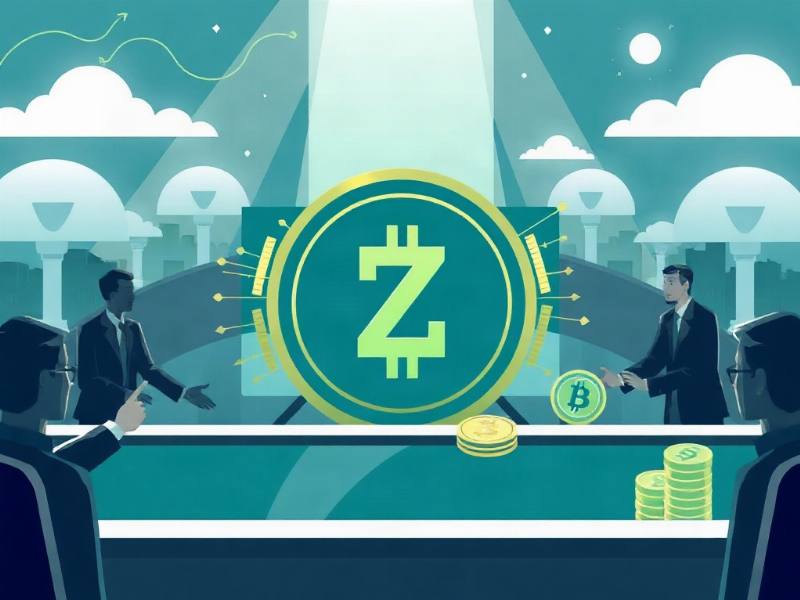
Navigating zcash regulatory scrutiny: Challenges, Opportunities, and the YoMix Perspective
Zcash regulatory scrutiny intensifies: challenges for privacy, opportunities for innovation, and why the YoMix perspective matters.
Oct 26, 2026 · 5 min
Blog · Oct 27, 2026 · 6 min read
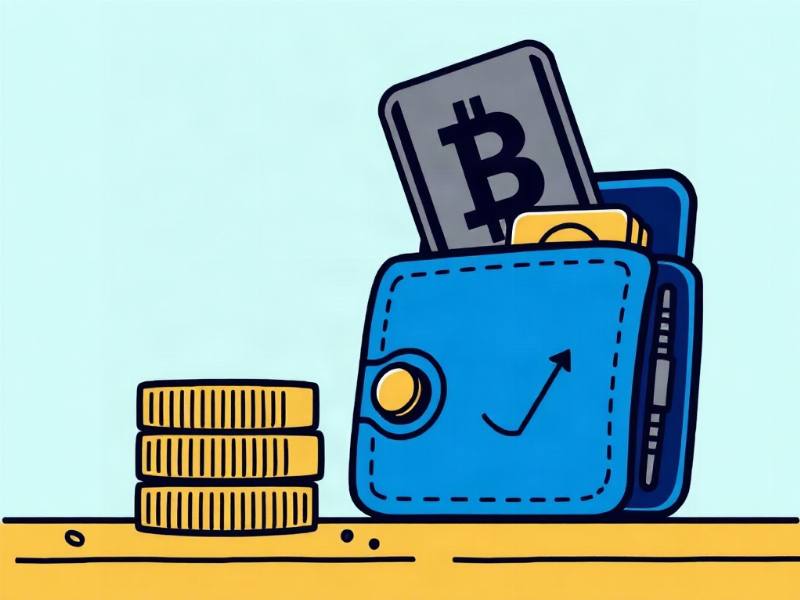
In the rapidly evolving landscape of digital asset management, the task of regulating non-custodial wallets has become a focal point for policymakers, industry stakeholders, and privacy advocates alike. Unlike custodial solutions, where a third-party holds the private keys, non-custodial wallets empower users with full control over their funds, reducing counterparty risk but simultaneously complicating oversight efforts. The YoMix niche, which encompasses privacy-focused transaction routing and coin-mixing services, often interfaces with these wallet types, making the regulatory dialogue even more nuanced. As governments worldwide grapple with the dual objectives of preventing illicit finance and preserving technological innovation, understanding the mechanics, challenges, and policy pathways surrounding regulating non-custodial wallets is essential for anyone operating at the intersection of crypto compliance and user sovereignty.
The philosophical underpinning of regulating non-custodial wallets rests on a fundamental tension: how can authorities enforce anti-money laundering (AML) and counter-terrorist financing (CTF) standards without undermining the decentralized ethos that makes cryptocurrencies attractive in the first place? This question drives much of the current legislative activity, from the Travel Rule implementations in the United States and Europe to more restrictive measures in jurisdictions with tighter capital controls. Each approach reflects a different risk tolerance and technological literacy, but the common thread is the need for actionable data without compromising the private key architecture that defines non-custodial ownership.
In the nascent days of Bitcoin, wallet regulation was virtually nonexistent. Early adopters operated in a largely uncharted territory where the concept of a "non-custodial wallet" was more a technical description than a regulatory category. The first significant shift occurred around 2013-2014, when exchanges and wallet providers began to face scrutiny over their role in facilitating transactions linked to darknet markets and fraud schemes. During this period, the focus was predominantly on custodial entities, as they held the operational levers necessary for compliance. However, as the ecosystem matured and non-custodial solutions gained traction—driven by demand for self-sovereignty and resistance to deplatforming—regulators were forced to reconsider the boundaries of their authority.
The emergence of hardware wallets, deterministic seed phrases, and cross-platform integration expanded the attack surface and the compliance landscape. Early policy drafts often treated any software capable of storing value as a potential financial institution, a broad categorization that failed to distinguish between true non-custodial implementations and thinly veiled custodial services. This mischaracterization led to industry pushback, emphasizing that code itself cannot enforce KYC; only human operators can. Consequently, the conversation shifted toward proportionality, focusing on the services built around non-custodial infrastructure rather than the infrastructure itself.
One of the most influential milestones in the regulation of non-custodial wallets was the Financial Action Task Force (FATF) Guidance on Virtual Assets and Virtual Asset Service Providers (VASPs), published in 2019. While the guidance primarily targeted exchanges, its "Travel Rule" recommendations implicitly extended to any entity facilitating transfers, including decentralized protocols and wallet interfaces. The FATF's stance clarified that the obligation to collect and share sender and receiver information applies to the "activity" of moving assets, not necessarily the ownership of the wallet. This distinction has been cited by both proponents and critics of regulating non-custodial wallets, depending on the desired outcome.
In the European Union, the Fifth Anti-Money Laundering Directive (5AMLD) and subsequent 6AMLD expansions brought virtual asset service providers under the AML umbrella, mandating registration, supervision, and reporting mechanisms. The EU's approach has been notably more harmonized than the fragmented state-level regulations in the U.S., where the Financial Crimes Enforcement Network (FinCEN) has issued interpretive rules and proposed rulemaking that sometimes appear contradictory. For instance, FinCEN's 2021 proposal to require wallets to collect identity information sparked a firestorm of opposition from developers and privacy advocates, who argued that such a mandate is technically unfeasible for truly non-custodial systems.
Asia-Pacific jurisdictions have displayed an even wider spectrum of responses. Singapore's Monetary Authority (MAS) has taken a progressive stance, introducing the Digital Token Services Framework, which provides clear guidance for wallet providers while emphasizing risk-based supervision. Japan, meanwhile, has enforced strict licensing under the Payment Services Act, requiring even non-custodial wallet operators to register if they facilitate fiat-on-ramps or interact with regulated entities. China’s approach, characterized by outright bans on private crypto transactions, effectively sidesteps the regulation-versus-innovation dilemma by prohibiting the ecosystem entirely, though this has driven much of the activity underground or into offshore platforms such as those within the YoMix niche.
At the heart of every non-custodial wallet lies a pair of cryptographic keys: a public address, which functions as the destination for incoming funds, and a private key, which grants the authority to sign transactions and spend those funds. The security model hinges on the principle that only the key holder can generate valid signatures, meaning that no third party can unilaterally access or transfer the assets. This design eliminates the need to trust a custodian, but it also places the entire responsibility of key safety on the user. Lost seeds mean lost funds, and compromised keys mean irreversible theft. Any regulatory framework aiming to oversee this space must grapple with the reality that the technical architecture is designed precisely to prevent exactly the kind of centralized oversight that regulators seek.
Modern non-custodial wallets often incorporate additional layers such as multi-signature (multisig) schemes, social recovery mechanisms, and hardware security module (HSM) integration. Multisig, for example, requires multiple private keys to authorize a transaction, thereby distributing control and reducing the risk of a single point of failure. Some implementations allow for "guardian" keys held by trusted parties, which can facilitate recovery without surrendering full custody to a single entity. These innovations complicate regulatory attempts, as they blur the line between purely user-controlled wallets and semi-custodial arrangements that might reasonably fall under compliance requirements.
Zcash regulatory scrutiny intensifies: challenges for privacy, opportunities for innovation, and why the YoMix perspective matters.
Oct 26, 2026 · 5 min
Learn how to manage crypto mixer legal risk with our comprehensive guide, covering compliance, regulatory challenges, and best practices for stakeholders.
Oct 28, 2026 · 6 min
Discover how a suspicious activity report crypto framework helps BTC mixer operators ensure compliance, mitigate risk, and satisfy regulatory demands.
Oct 26, 2026 · 6 min
Discover how crypto regulation south korea is shaping market trends and future opportunities for investors.
Oct 28, 2026 · 5 min
The russia digital currency law reshapes crypto regulation, impacting global finance, investment flows, and digital asset adoption worldwide.
Oct 26, 2026 · 6 min
A clear breakdown of unhosted wallet reporting rules, compliance steps, and what they mean for crypto users and the YoMix community.
Oct 28, 2026 · 8 minIt will take only a few minutes to upgrade your privacy